The Grey Soul of London

An audio guided tour across the worn and hollowed stones of the Angel and Clerkenwell districts of London in search of places that inspired the writer Arthur Machen (1863-1947).

You can listen to it through audiobook retailers and subscription services: NOOK Audiobooks, Chirp, audiobooks.com, Libro.FM, Kobo and Google Play.

‘He who cannot find wonder, mystery, awe, the sense of a new world and an undiscovered realm in the places by the Gray’s Inn Road will never find those secrets elsewhere.’ – Arthur Machen

‘It is a district both devious and obscure, and I suppose that its twisting streets and unexpected squares of dusty trees will all come to ruin before they are intelligently explored.’ – Arthur Machen

The Grey Soul of London was originally a guided tour commissioned for the Museum of London’s Urban Myths season in 2011. It has now been rewritten and expanded for 2023, with incidental music by Rich. Everything you need in terms of directions and instructions is contained within the audio narrative, so you can just listen and walk. The total length of the walk is 5.5km (c. 8,000 steps).

Read reviews of the original walk from Ham Life and Londonist. Robert can still be cajoled into running The Grey Soul of London as an in-person guided walk: contact us for private bookings.

Map
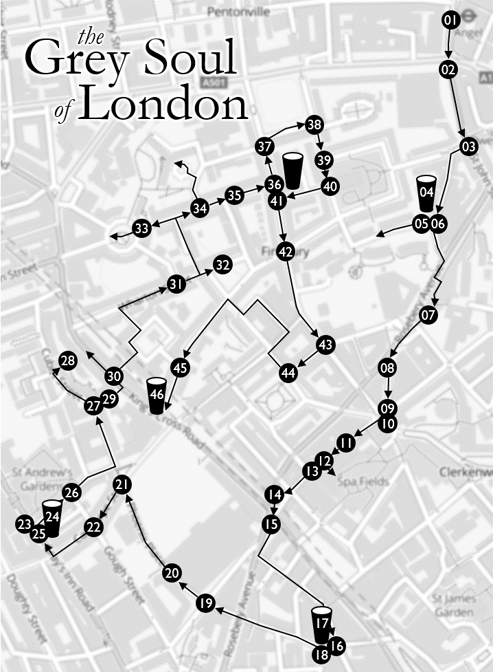
Audio stops on the 'The Grey Soul of London' tour, in Angel and Clerkenwell and Finsbury areas of London.
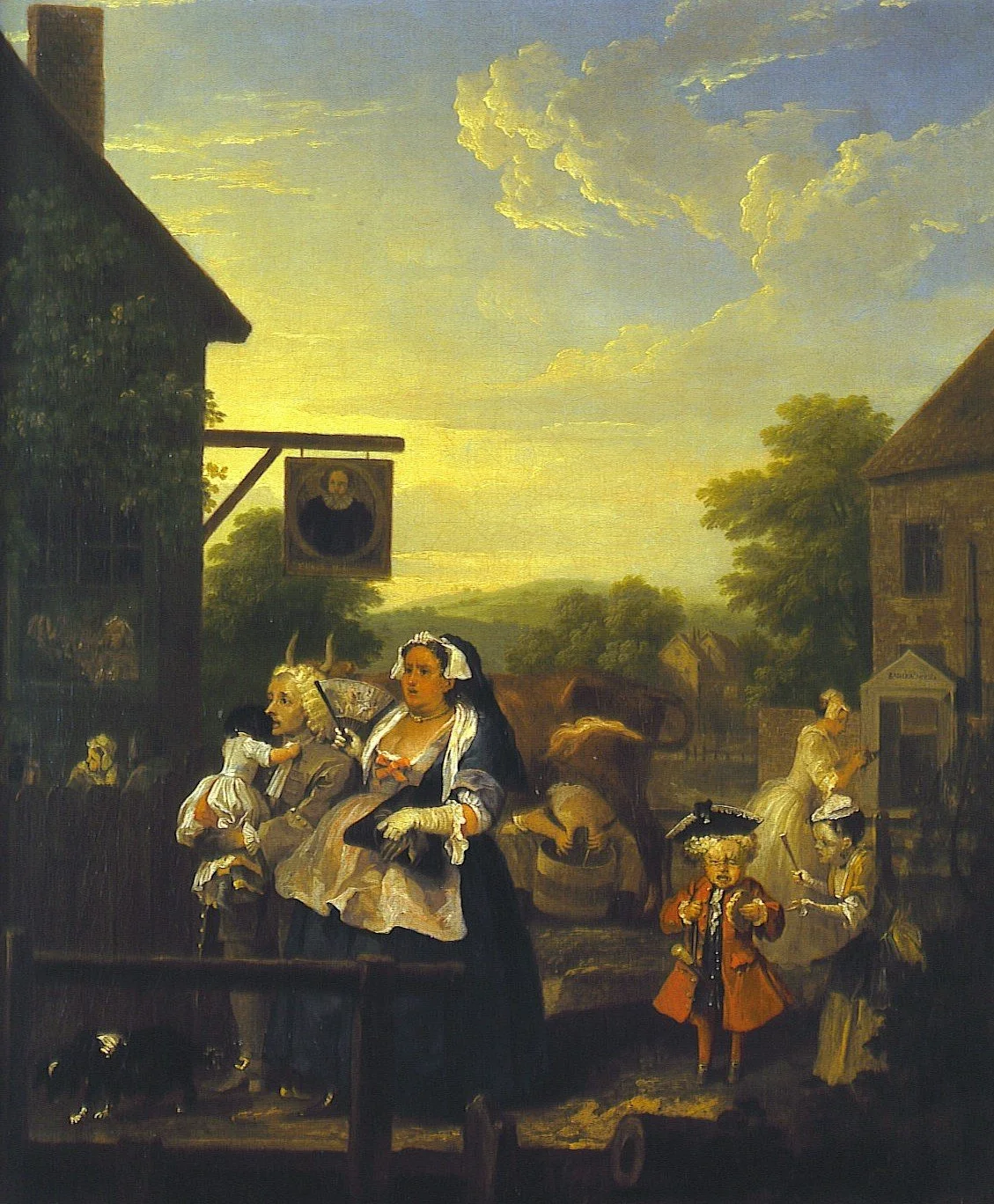
A painting depicting 18th-century rural life with people and children engaging in leisure activities outside a village, during sunset or early evening. Hogarth’s ‘Evening’ showing Sir Hugh Myddelton’s Head, 1738.

Leg 6: Hogarth’s ‘Evening’ showing Sir Hugh Myddelton’s Head, 1738.

Leg 8: You can read about the Garnault Place Control Centre at Subterranea Britannica.
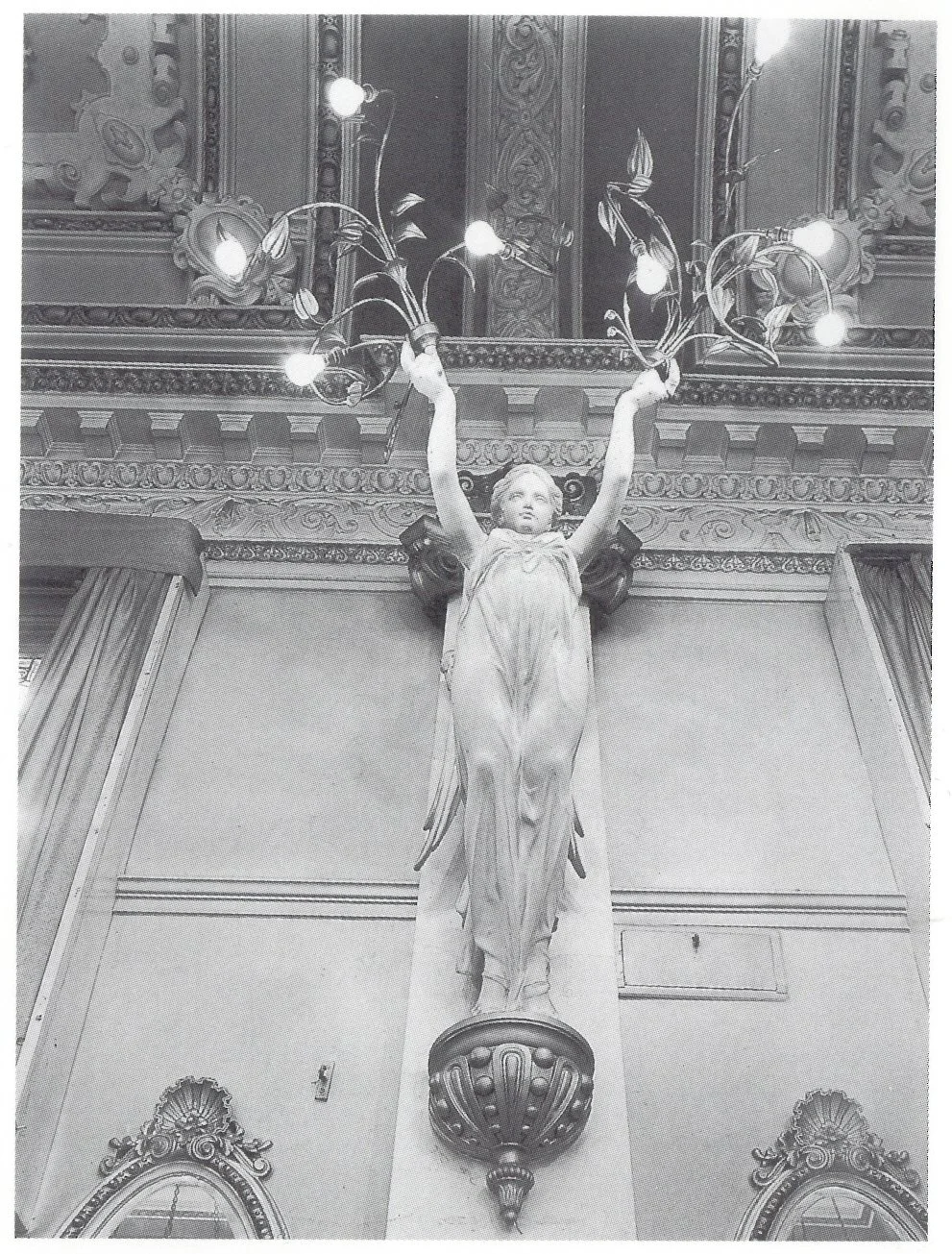
A black and white photo featuring a statue of a woman with arms raised, holding a decorative chandelier with lights. A ‘Clerkenwell angel’ inside Finsbury Town Hall.
Leg 7: A ‘Clerkenwell angel’ inside Finsbury Town Hall.

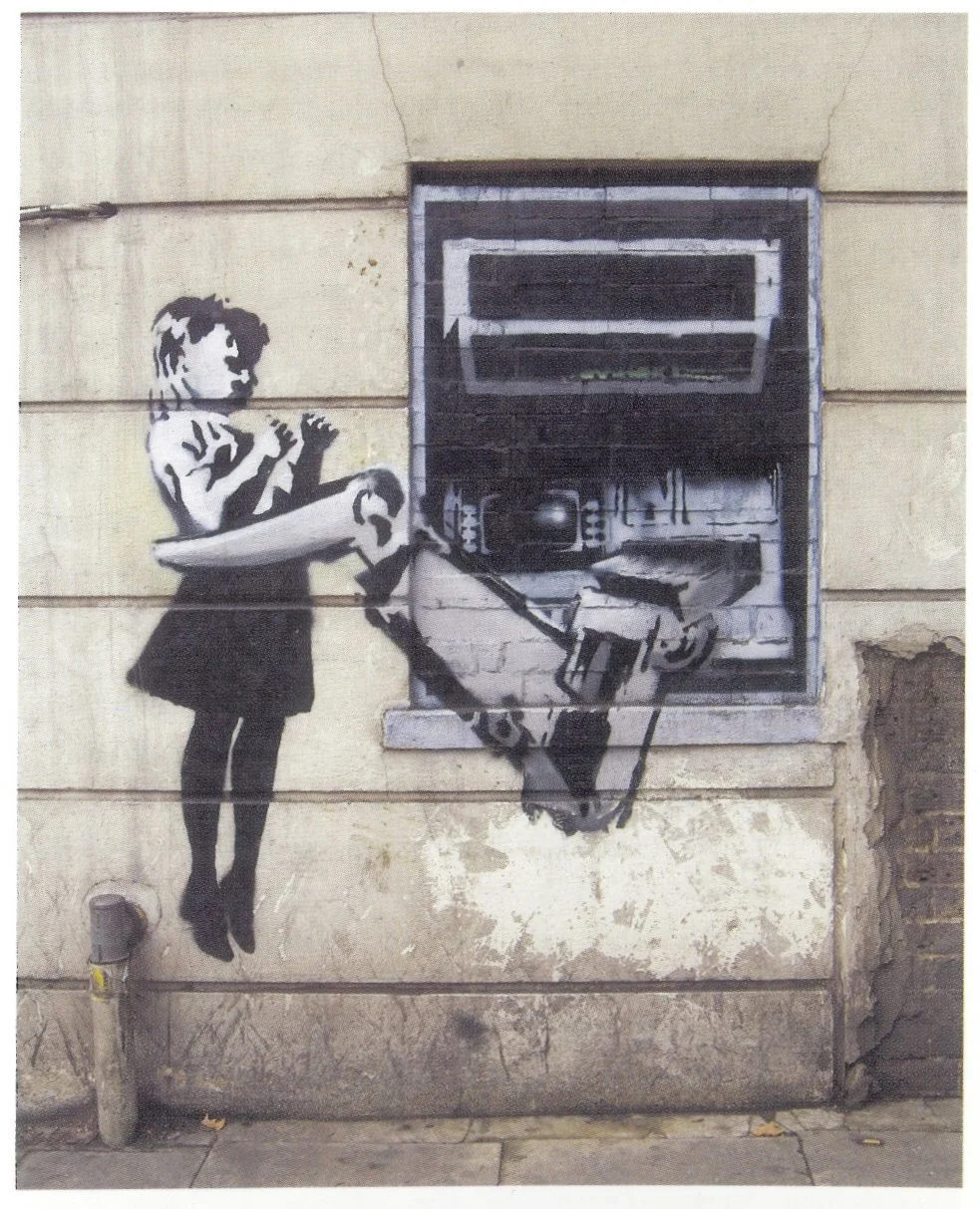
Banksy’s cashpoint. Street art graffiti of a girl with pigtails in a school uniform being grabbed by a mechanical arm emanating from a cashpoint.

Leg 14: Banksy’s cashpoint.

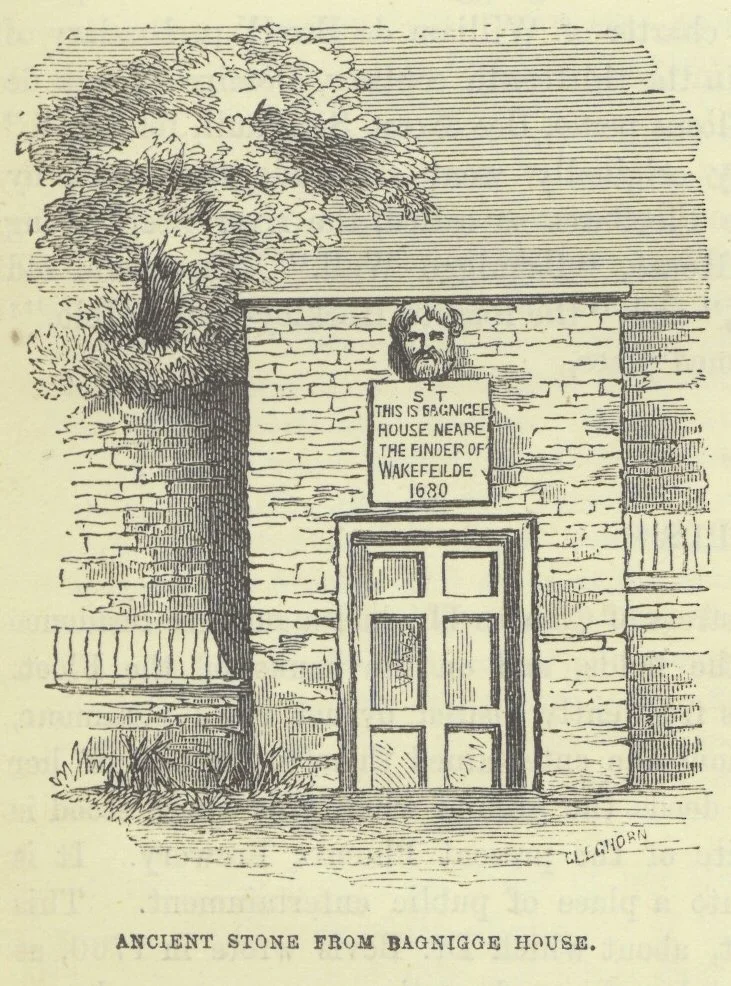
Drawing of an ancient stone house with a door, a large tree to the left, and a carved stone face above the door with a plaque that reads: "This is Bagnigge House near the Pinder of Wakefeilde 1680."

Leg 29: The faun’s head was unwisely adopted as a mascot logo by Minimum Labyrinth. It moves unseen from building to building as it pleases.
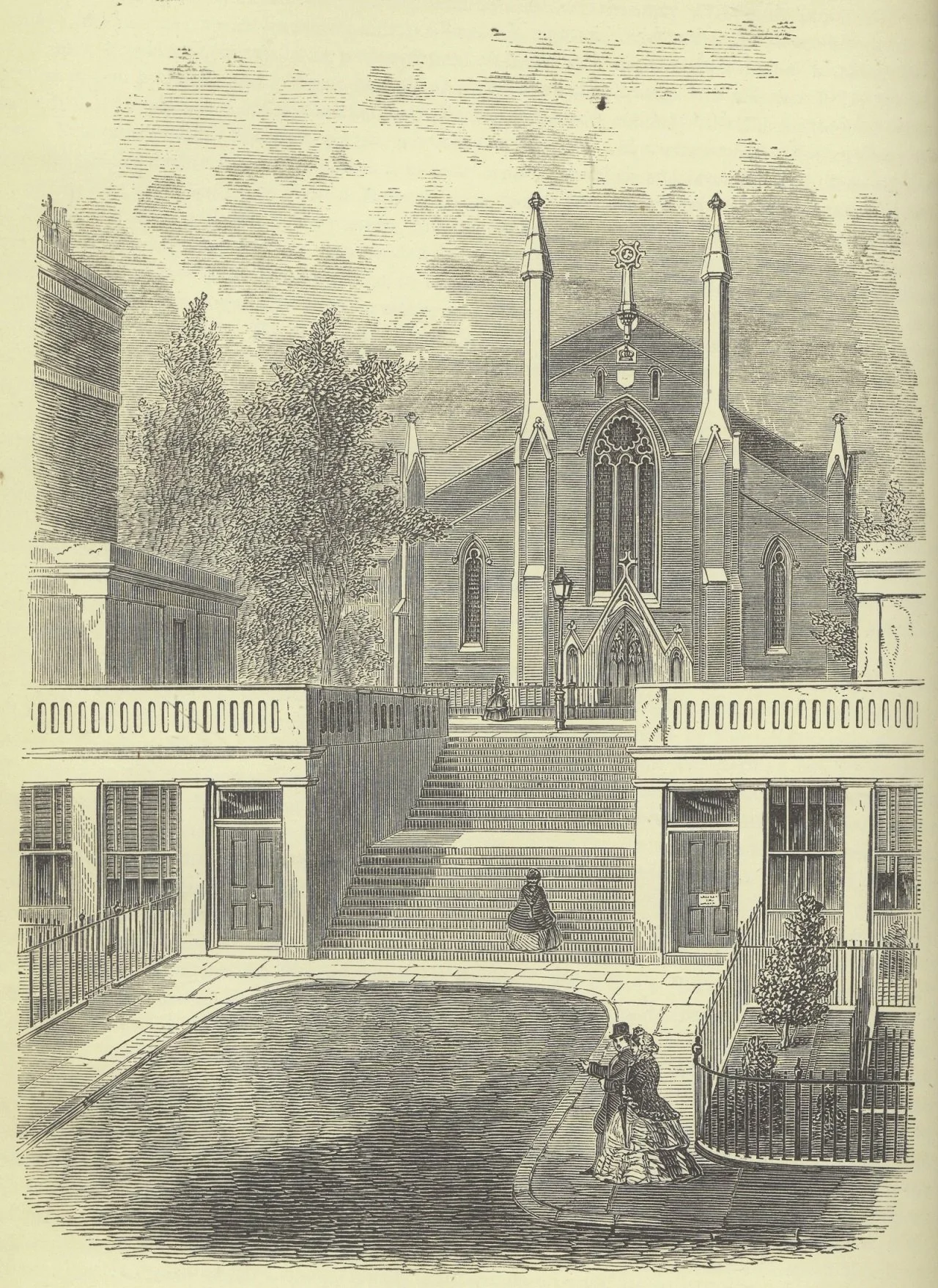
Historical black-and-white illustration of a church with gothic architecture, large stained-glass windows, and pointed spires. ‘Riceyman Steps’ leading up to the church of St Philip, Granville Square.
Leg 30: ‘Riceyman Steps’ leading up to the church of St Philip, Granville Square.

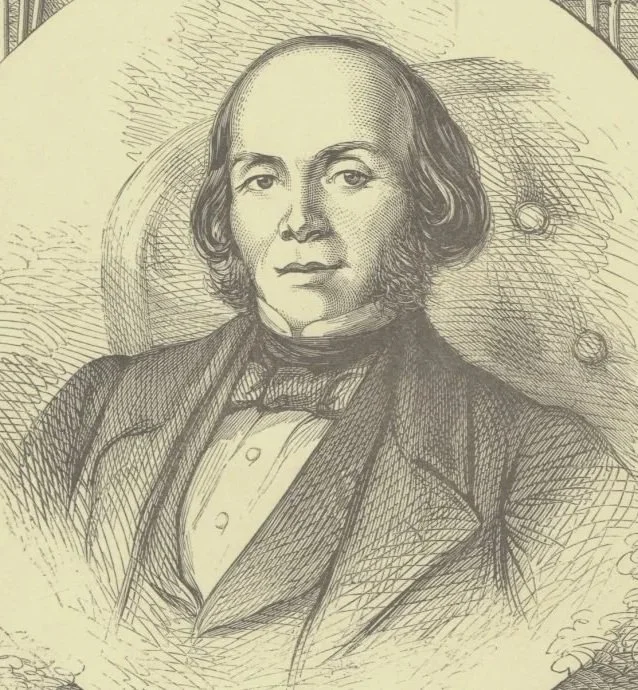
The finely-formed forehead of local historian William John Pinks (1829-60), rising with intellectual promise over his pale and sunken cheeks.

Leg 30: The finely-formed forehead of local historian William John Pinks (1829-60), rising with intellectual promise over his pale and sunken cheeks.

Images
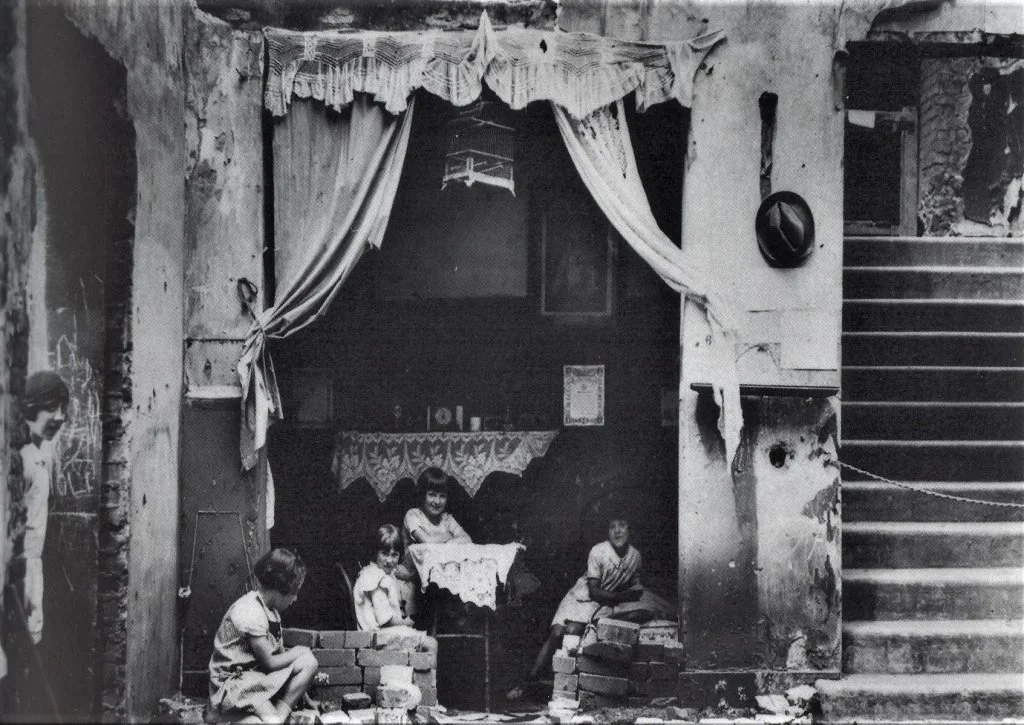
The ‘little housewives of Sadler’s Wells’, 1923. A black and white photo showing a small group of children sitting outside a damaged building, with torn curtains hanging, a staircase on the right, and old, worn walls.
Interlude 4: The ‘little housewives of Sadler’s Wells’, 1923.

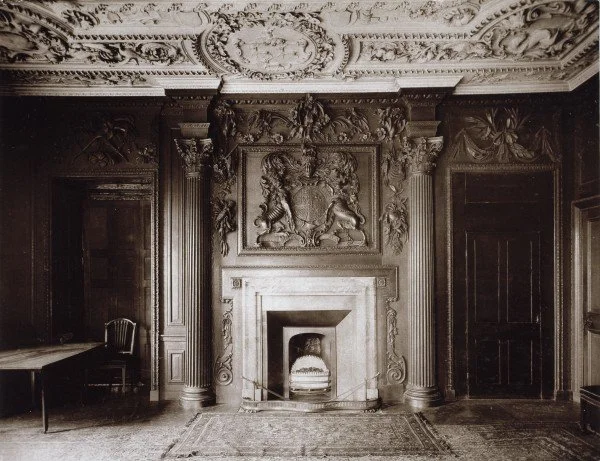
An ornate historical room featuring a large decorative fireplace with detailed carvings, flanked by two columns, and a carved lion crest above. The Oak Room within the old Metropolitan Water Board offices.
Leg 6: The Oak Room within the old Metropolitan Water Board offices.

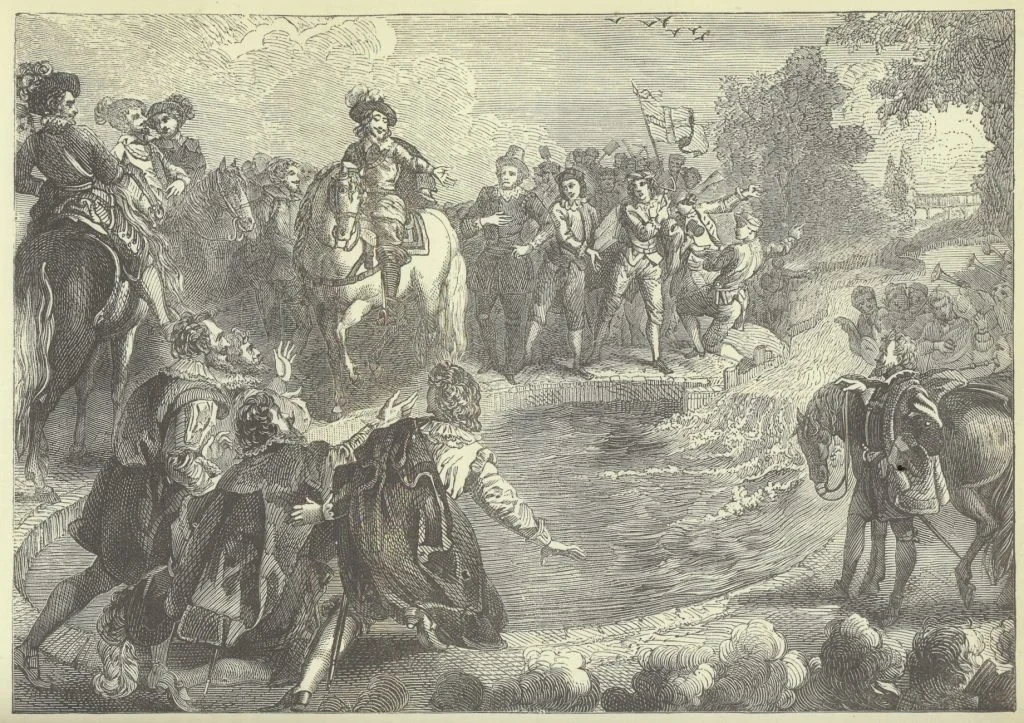
Historical black and white illustration depicting a group of people outdoors, gathered around a water body, with some on horseback. The theatrical opening ceremony of the New River Head, 1613.
Leg 6: The theatrical opening ceremony of the New River Head, 1613.

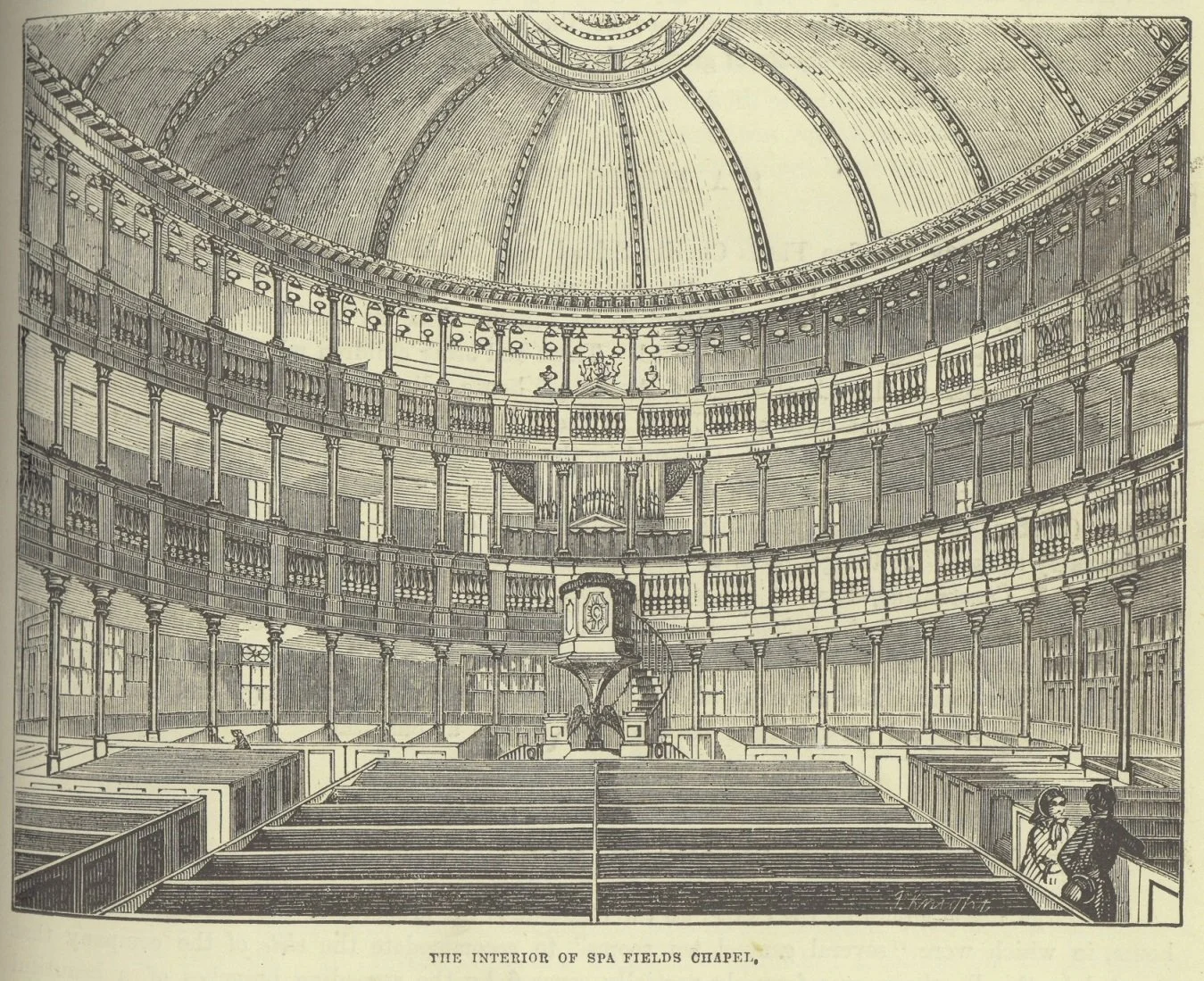
Black and white illustration of the interior of Spa Fields Chapel, showing a large, domed ceiling, multiple balconies with railings, and a central pulpit with a staircase. The Pantheon Tea House, transformed into the Spa Fields Chapel.
Leg 13: The Pantheon Tea House, transformed into the Spa Fields Chapel.

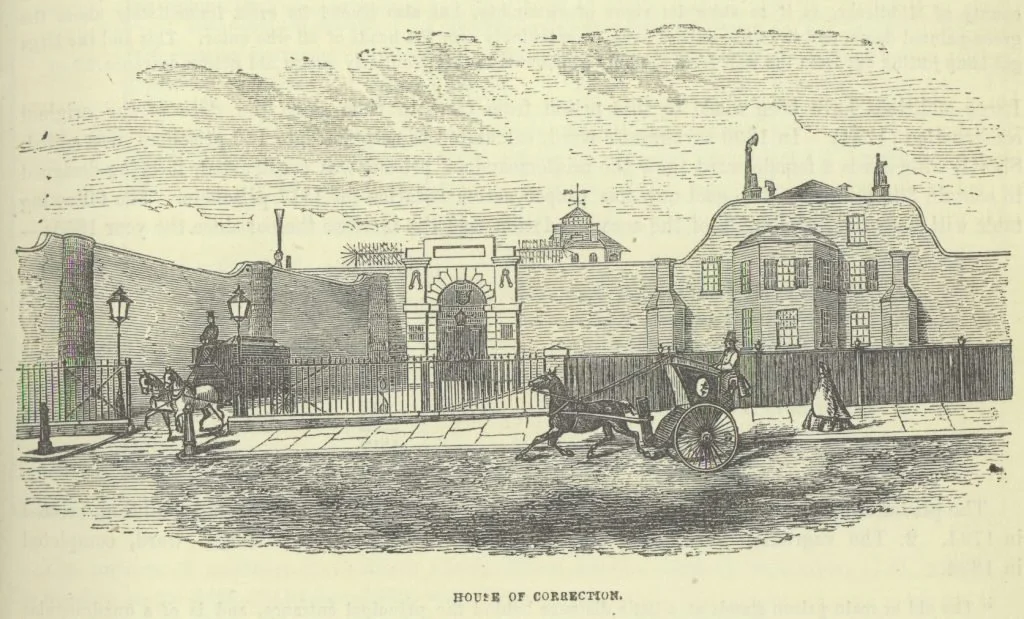
Historical illustration of a prison labelled 'House of Correction' with a castle-like exterior, a gate, a horse-drawn carriage, and a few figures outside. Cold Bath Fields Prison.

Leg 19: Cold Bath Fields Prison.

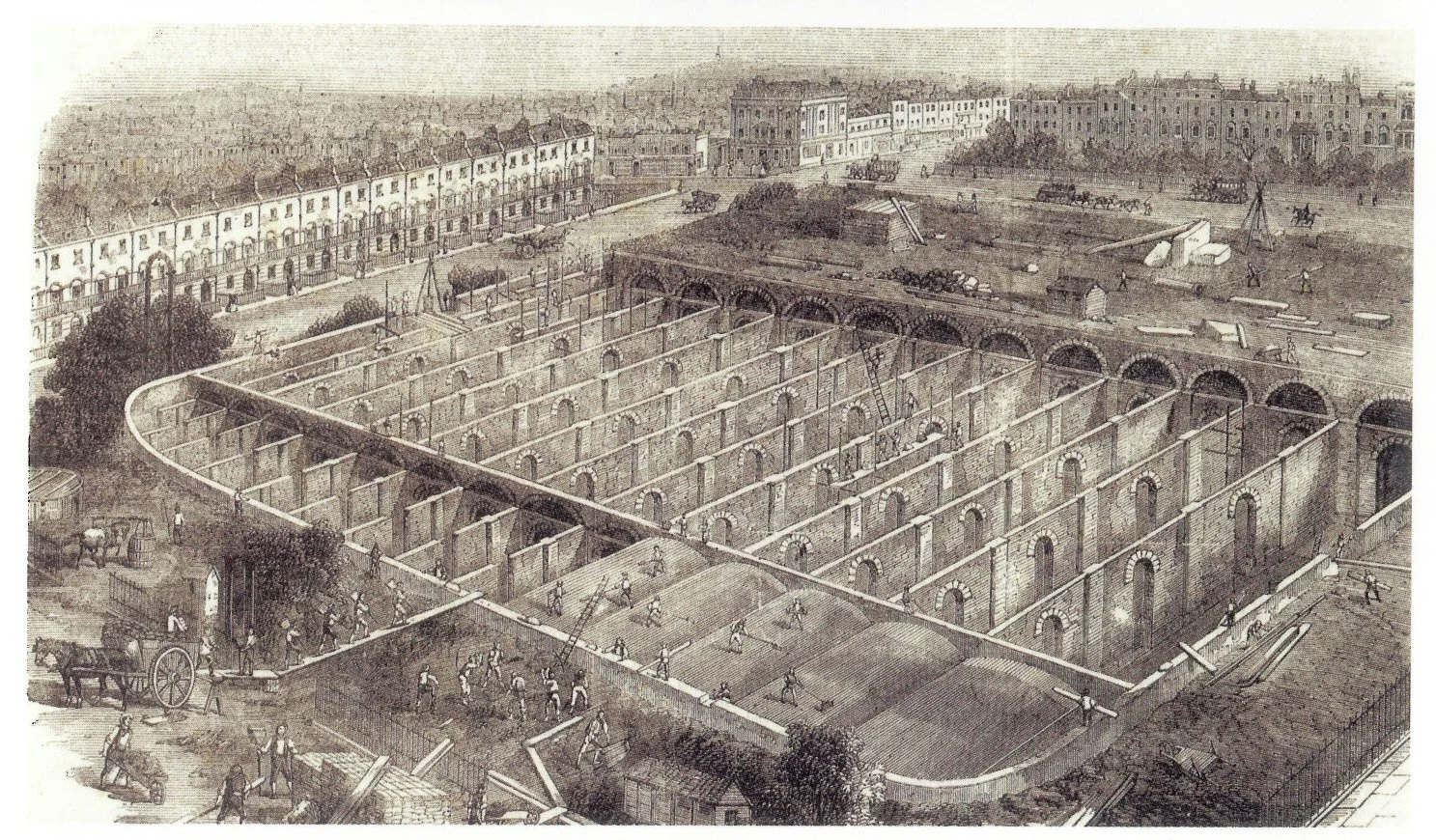
Historical black and white illustration of a construction site with a large foundation being built, surrounded by early 20th-century buildings, horse-drawn carts, and workers.  Building the Claremont Square reservoir, 1855.
Leg 37: Building the Claremont Square reservoir, 1855.

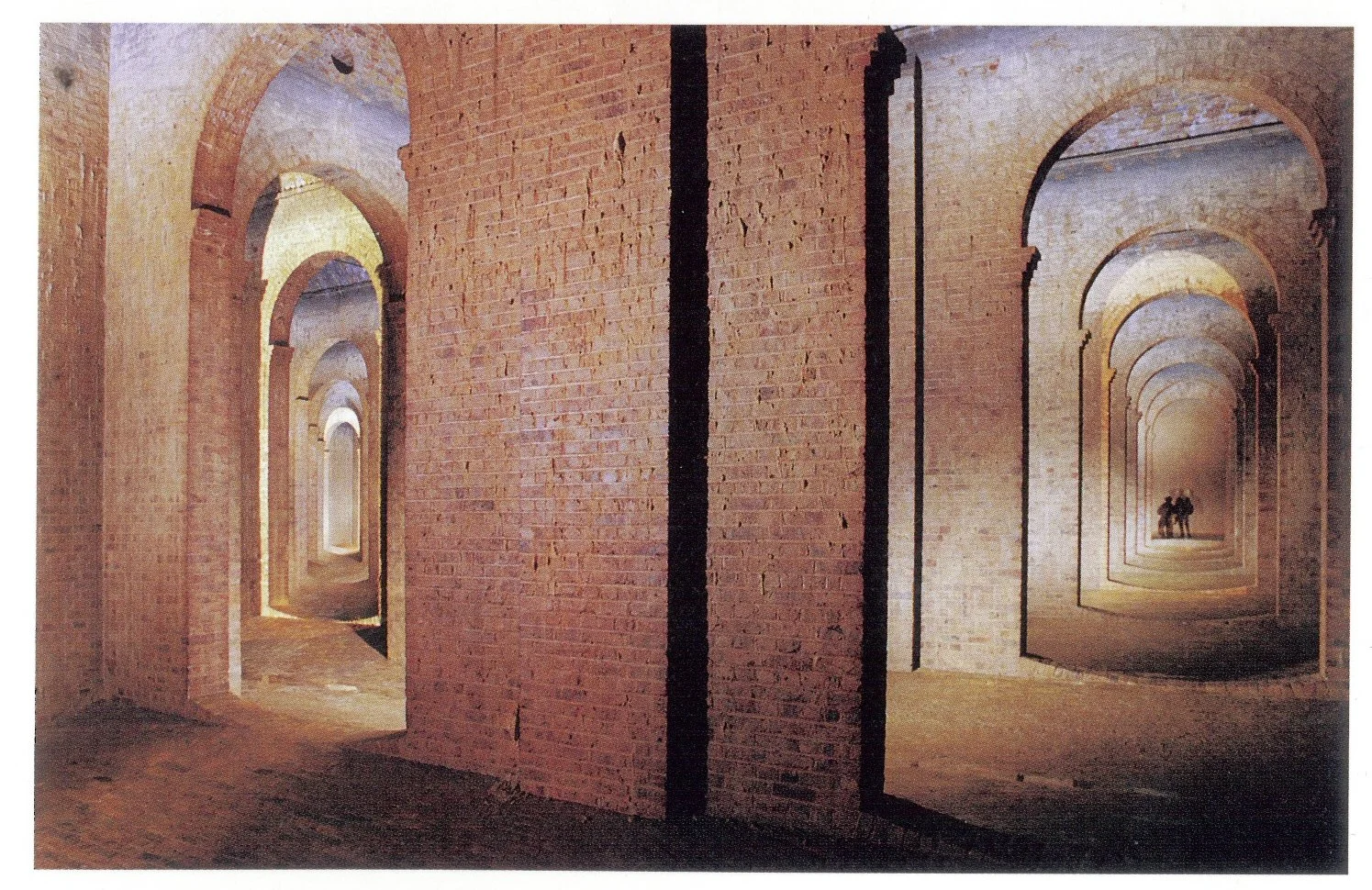
A series of brick archways with a view through the openings, leading to a distant figure of two people standing together. A drained Claremont Square reservoir, 2000.
Leg 37: A drained Claremont Square reservoir, 2000.

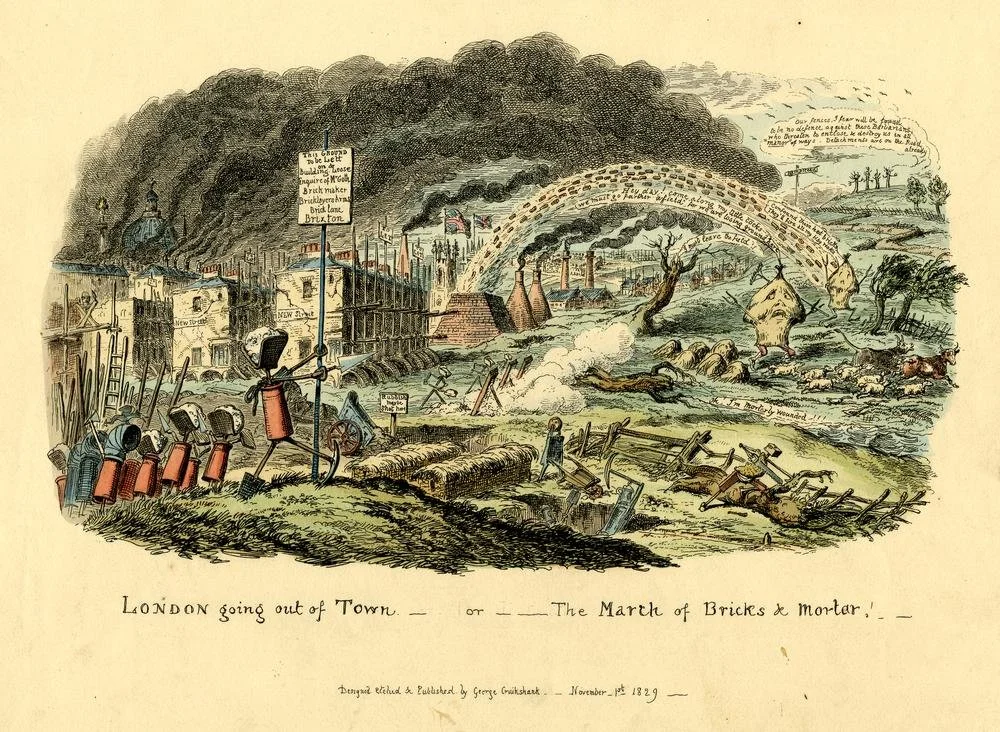
Illustration titled "London going out of Town -- or -- The March of Bricks & Mortar!" from November 1829, depicting the destruction caused by industrialization in London with buildings burning, smoke billowing, and construction hazards.

Leg 36: George Cruikshank, nimby, 1829.